
When the Sphinx Opens Its Eyes: Regulus, the Heart of the Lion, and the New Knowledge Coming to Earth

By Kaminie Persaud | The Star Feed
What happens when one of the oldest stars in human memory aligns with one of the oldest monuments on Earth, in a year already crackling with cosmic disruption?
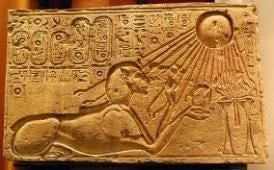
There is a prophecy circulating through spiritual, astronomical, and even intelligence circles right now that has people looking toward the sky with a kind of quiet urgency. It was delivered by Chris Bledsoe, a former airline pilot and experiencer who has spent nearly two decades in conversation with non-ordinary intelligences. The prophecy is simple and specific:
“When the red star Regulus aligns just before dawn in the gaze of the Sphinx, a new knowledge shall come into the world.”
The year in question is 2026.
According to Bledsoe’s account, the prophecy came from Hathor. Bledsoe is the receiver and the messenger, not the source.
In his testimony, he describes encountering a radiant feminine being during his 2007 experience near the Cape Fear River, whom he identifies as the ancient Egyptian goddess Hathor. She is the one who delivered the prophecy about Regulus and the Sphinx. Bledsoe then brought that message forward, sharing it with NASA contacts, Air Force generals, and eventually the public.
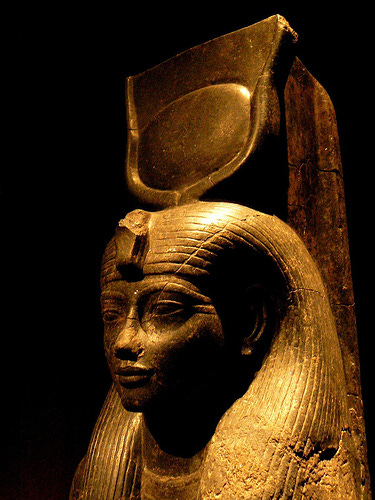
Hathor is one of the most ancient and multidimensional goddesses in the Egyptian pantheon, associated with the sky, the Milky Way, music, love, and the divine feminine solar force. She was sometimes depicted as a celestial cow whose body arched across the sky, and in other traditions she was identified with the Eye of Ra, the fierce and luminous power that sees all. Hathor and Sekhmet are two faces of the same cosmic feminine, one nurturing, one devastating, both truth-telling.
Regulus: The Heart That Has Never Stopped Beating
The name Regulus comes from the Latin signifying “prince” or “little king.” It is also referred to as Cor Leonis, the Latin translation of the Greek Kardia Leontos, meaning the Heart of the Lion. But this star has been known and honored long before Latin was a language. As early as 3000 BCE, Babylonian astronomers called it Sharru, meaning “the King.” The Persians called it Miyan, meaning “the Center,” and considered it one of the four Royal Stars. In India, the star was known as Magha, which means “the Mighty.”
Every civilization that has ever kept serious watch of the sky converged on the same conclusion about this star: it marks kingship, sovereignty, and the moment when one era hands its authority to the next.
The Persians classified Regulus as the most influential of their four royal stars. It was known as the Guardian of the North, with its heliacal appearance signaling the summer solstice. The royal stars were used in navigation, world astrology, and divination. Favorable alignments with Regulus were believed to bring favorable events, while unfavorable ones foretold disaster and destruction.
The Nakshatra Magha is the celestial abode of the Pitris, the elevated ancestors, and is ruled by Ketu, the south node of the moon, that most karmic and releasing of all nodes. In Kabbalistic terms, this region of the sky corresponds to the principle of Gevurah filtered through Chesed, strength given structure by wisdom’s grace.
The traditions are unanimous: this is a star of threshold moments. Of kings being made and unmade. Of old worlds ending and new ones stepping forward.
The Sphinx Faces East, and It Always Has
The Great Sphinx is a monolith carved into bedrock that aligns with the eastern horizon at the start of spring. The Sphinx will face the sun at sunrise, and the sun will set behind its back. The reverse is true at the autumnal equinox.
That eastward gaze was not arbitrary. The Egyptians were stargazers. They used star alignments and precession predictions as the basis for the Sphinx’s construction, likely leveraging their understanding of how specific star systems rose due east at the turn of seasons.
One paper using NASA-built datasets has provided evidence for the Sphinx’s astronomical alignment with Regulus between 3000 BCE and 2000 BCE. The monument was built to watch the sky, specifically this part of it. Their data shows Regulus consistently appearing at or near 90° azimuth, the precise angle of the Sphinx's orientation, with the strongest alignments clustering between 2600 and 2400 BCE, coinciding with the monument's conventional construction period. Here is what was happening during 2600 to 2400 BCE, the exact window when the Regulus-Sphinx alignment was at its peak:
Egypt: The Great Pyramids of Giza and the Sphinx are built. The Old Kingdom reaches its absolute zenith of power.
Mesopotamia (modern Iraq): The oldest known surviving literature appears, the Sumerian texts from Abu Salabikh, including the Instructions of Shuruppak and the Kesh temple hymn. Humanity writes its first words down, and they are sacred.
Indus Valley (modern Pakistan/India): The mature Harappan phase begins in 2600 BCE, with Mesopotamia and Egypt co-existing with the Indus civilization during its peak florescence. By 2600 BCE the Indus Valley civilization had planned cities with complex public works like sewage and drainage systems, a shared written language, and regulated trade with Egypt and Mesopotamia.
Mesoamerica: The emergence of Mayan culture in the Yucatan Peninsula begins around 2600 BCE.
Britain: Stonehenge’s major stone phase is being constructed during this same period.
They conclude that the Sphinx was not purely a solar monument but what they call "a stellar sentinel of cosmic order," with Regulus encoded into its very orientation as a timekeeping and symbolic marker. The inclusion of Saturn in several of the alignments further suggests that planetary conjunctions with the heart of the lion carried specific ritual and calendrical weight for the builders. This was not accidental architecture. This was a civilization writing its cosmology in stone.
This alignment is thought to represent a cosmic order, with the Sphinx acting as a terrestrial counterpart to the celestial constellation Leo, of which Regulus is the heart star.
Think about what that means architecturally and spiritually. The Sphinx is not simply a statue. It is a receiver, a tuning fork, a lens pointed at the cosmos. Its lion body does not represent Leo accidentally. The ancients encoded a permanent correspondence between the monument and the star that sits at the heart of Leo’s constellation. They built in stone what they saw in the sky, so that future generations, even thousands of years removed from that original knowledge, would have a key.
The monument endured. The key was preserved. And now the sky is completing its cycle back toward alignment.
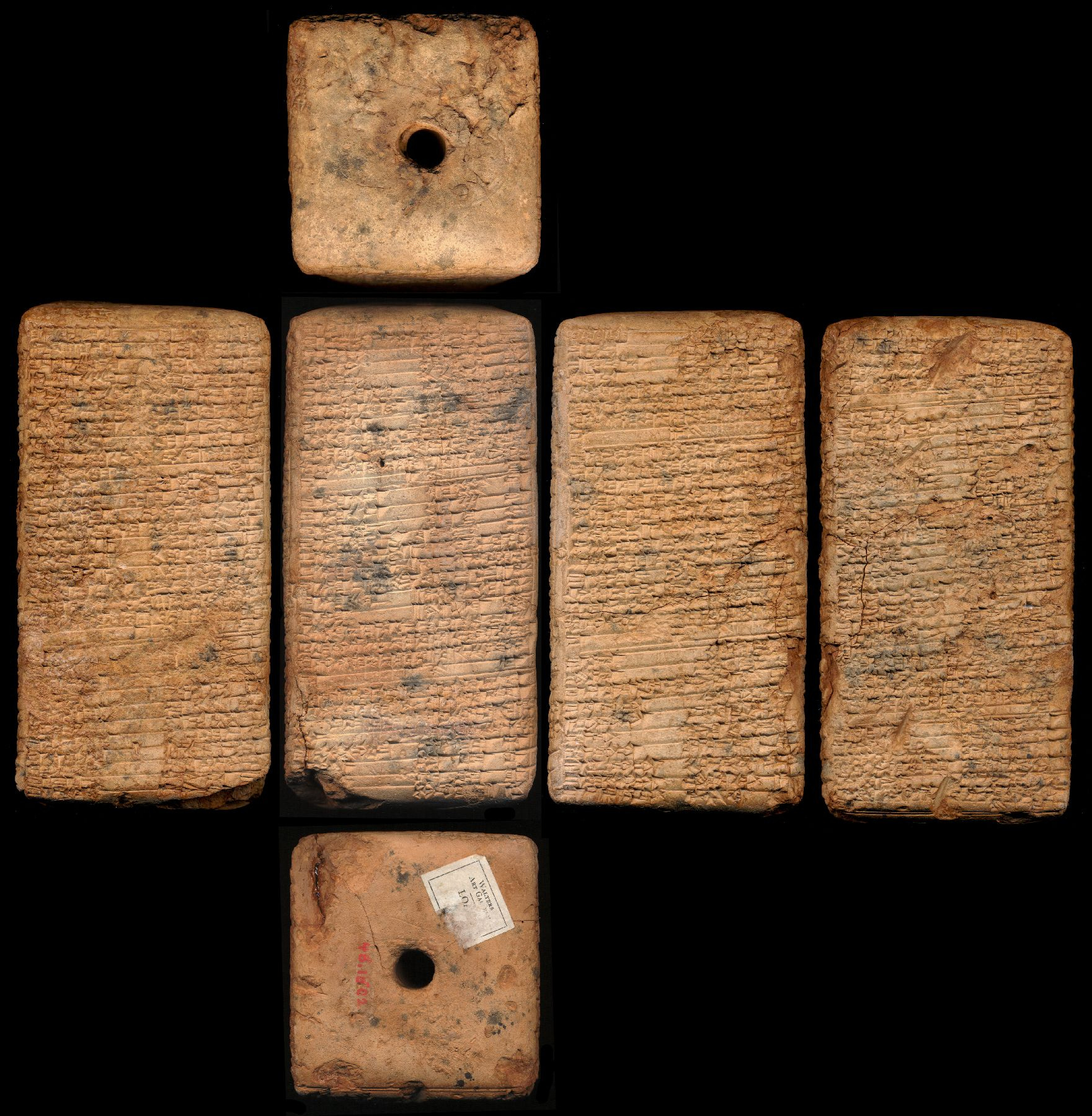
The Kesh Temple Hymn is the oldest work of literature in the world, dated to around 2600 BCE. It is a Sumerian praise song to the goddess Ninhursag and her temple in the city of Kesh, composed in eight sections progressing from the temple’s foundation to a cautionary welcome.
At its core it is humanity’s first written act of sacred devotion. The hymn revolves around Enlil, the head of the Sumerian gods, who gave permission to the citizens of Kesh to build the temple. It explains that Enlil came forth from the divine assembly, lifted his gaze over all the lands, and the lands raised themselves toward him. The four corners of heaven turned green like a garden. The temple itself is described as a cosmic axis, reaching both for heaven and descending into the underworld, containing the life sources of Sumer and its cosmic dimensions filling the world.
The hymn is attributed to Nisaba, the goddess of writing and literature, in a relationship scholars have likened to that of Yahweh and Moses, where the divine gave the text to a messenger to relay to humanity. Scholars have also noted remarkably close parallels between the hymn and chapter 49 of Genesis.
The full English translation of the Kesh Temple Hymn is available here.
What the Alignment of 2026 Actually Means Astronomically
Bledsoe claims he shared this prophecy with NASA contacts and astronomers in 2012, prompted by two Air Force generals who requested written documentation of his predictions. Using advanced astronomical software, these researchers reportedly confirmed that Regulus would align with the Sphinx’s eastward gaze during this period, a rare event tied to the star’s gradual drift across the sky.
The precise date remains a subject of genuine debate. Independent analyses indicate Regulus may rise in front of the Sphinx on August 29, 2026, or October 7, 2026, rather than April 5. Earlier interviews by Bledsoe referenced September or the autumn equinox, hinting at possible variation in his original timeline. What matters spiritually is less the calendar date than the window of convergence, because astronomical alignments of this kind are not single-second events. They are seasons.
The “red star” language is also worth examining honestly. Regulus A, the primary star, is blue-white, though it has a faint red dwarf companion, Regulus C, invisible to the naked eye. Some speculate the “red” reference is symbolic, tied to ancient Egyptian associations of Regulus with royalty and divine power, or even a rare atmospheric effect like scattering. When a star sits on the horizon just before dawn, atmospheric refraction can genuinely redden its light the same way it does the rising sun. Seers and poets have always perceived color as quality, not just wavelength. To call Regulus red in a visionary moment may be to perceive its essence rather than its spectrometer reading.
Adding another celestial layer, on April 26, 2026, the Moon will pass in front of Regulus in a lunar occultation visible from much of the Americas, a phenomenon where the moon swallows the heart of the lion and then releases it, as if setting something in motion. Occultations of royal stars were watched in ancient times with particular intensity. To the astrologers of Babylon and Persia, the Moon concealing and then revealing Regulus was a moment of hidden authority made visible again.
The Heart of the Lion in Every Tradition
What strikes the cross-traditional observer is how thoroughly every culture encoded this same star as the moment when cosmic order reasserts itself through a specific point on Earth.
In ancient Egypt, Horus was identified with the Sun’s passage through the Leo constellation, specifically the moment it joins with the heart star of Leo. In Old African tradition and ancient Egyptian mysteries, lion kings are connected to the heart of the sky lion, known as Regulus. Geographically, Leo relates to the site of Giza, humankind’s oldest leonine monument, the Sphinx.
In Vedic understanding, the star field around Regulus is the throne of ancestral kings, a place where the accumulated wisdom of the lineage can be accessed. Indigenous traditions across the African continent have long watched this star as the moment when the earth lion and the sky lion come into resonance. Sacred sites connected to the lion on the African continent, including Giza, Great Zimbabwe, and Timbavati, are all consecrated to the lion archetype and connected to this same sky geography.
In Islamic star-lore, the Arabic name Qalb al-Asad, the Heart of the Lion, was used by navigators not only to chart the seas but to orient pilgrim routes. The heart of the lion pointed the way home. In Christian mystical tradition, archeo-astronomer Adrian Gilbert identified the moment when the Sun conjoins with Regulus as the heavenly moment associated with Christ’s birth, a conjunction considered of paramount significance in Egyptian mythology. Baba Credo Mutwa, the great Zulu elder and keeper of oral cosmological tradition, held that when the sun conjoined Regulus, it marked the birth or death of a great king on Earth.
Across Babylon, Persia, Egypt, India, Arabia, Africa, and medieval Europe, the testimony is a single note held in many different voices: Regulus is the place in the sky where earthly authority is renewed through cosmic contact.
New Knowledge and New Systems
The phrase in Bledsoe’s prophecy that deserves the most careful attention is not the astronomical one. It is the word knowledge.
Not a new ruler. Not a new war. Not even a new religion. New knowledge.
This is a significant spiritual distinction. Knowledge, in the ancient sense, was never merely information. It was gnosis, direct experiential understanding, the kind of knowing that restructures how a person or a civilization relates to reality. The Egyptian concept of Sia, divine perception, was the attribute of Ra that allowed him to see things as they truly were. The Sanskrit jnana is the liberating insight that dissolves the illusions separating the individual from the universal. The Quranic term ilm encompasses all knowledge as ultimately a divine attribute flowing through human receptivity. What every tradition agrees on is this: genuine new knowledge does not simply add to what we know. It reorganizes the architecture of knowing itself.
We are already watching this reorganization happen. Artificial intelligence is restructuring how humans access, process, and produce information at a pace that has no historical parallel. Quantum biology is revealing that living systems do not operate through simple mechanical chemistry but through quantum coherence, the kind of non-local, field-based communication that serious spiritual traditions have been pointing to for millennia. Consciousness research is arriving, haltingly but unmistakably, at conclusions that indigenous and mystical traditions encoded long ago: awareness is not a product of matter. It is the medium matter moves through.
In Egyptian architecture, the Great Sphinx, with its lion’s body and human head, is believed by some scholars to face Leo’s rising point on the horizon, connecting the monument to the constellation’s symbolism of power guarding sacred knowledge. What is guarded, by definition, is not yet public. What is guarded is released when the right conditions are met, the right alignment is reached, the right receiver is prepared.
The 2026 sky is already dense with initiatory pressure. Saturn and Neptune are conjuncting in the early degrees of Aries, dissolving every old structure of authority and spiritual certainty that has calcified over the last fourteen years. Neptune’s ingress into Aries, which we are watching in real time, marks the first time this planet of collective vision has entered the sign of new beginnings in over a century and a half. Mercury is moving through retrograde cycles in water signs, pulling the collective mind inward, demanding that what has been submerged be brought to the surface.
Into all of this arrives the alignment of the Sphinx’s gaze with the Heart of the Lion. Whether you read it as literal prophecy, as sacred astronomy, or as symbolic convergence, the message is structurally identical: a guardian points at a threshold star, and through that alignment, something that has been held in reserve is made available.
What This Means for Those Awake Enough to Receive It
Every threshold event in the sky is also an inner threshold. The ancient Egyptians knew this. Their astronomy was never separate from their psychology or their cosmology. When the Sphinx turns its face toward Regulus, the lion guards the knowledge not in the bedrock of Giza but in the bedrock of human consciousness.
The question the alignment asks each of us is the same one every initiation has ever asked. Are you ready to be reorganized by what you receive? Can you hold new knowledge without immediately trying to force it into the containers of your old understanding?
In Vedic astrology, the period we are entering carries the energy of Magha, the nakshatra of ancestral authority and royal release. The invitation is not to claim power but to receive it as a transmission that was always intended for this moment. In the Sufi understanding, the manzil of the lion’s heart was used for magical elections involving the strengthening of allies and the fortification of what has been built. We are in a season of building, not destroying, of strengthening the structures that belong to the new world, not defending the ones that have already served their purpose.
The new knowledge may arrive through a scientific discovery. It may arrive through the release of information that has been suppressed. It may arrive through a collective shift in perception so gradual it feels inevitable only in retrospect. Or it may arrive the way it always has in the deepest traditions, not announced, not broadcast, but absorbed quietly by those who were facing east at the right moment.
Are you feeling the pressure of this cosmic season in your own life? What old knowledge are you releasing, and what new understanding is beginning to move through you?
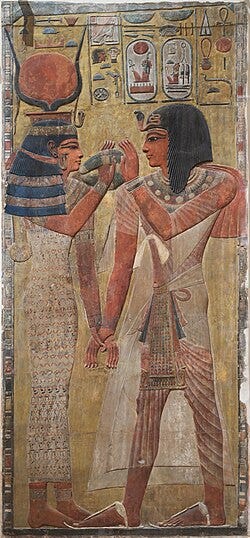
From the Hymns of Hathor
I.”Who fills the earth with golden motes of sunlight, who comes alive in the liminal east and sets in the liminal west.”
II.”I give thee everything that the sky provides, that the earth creates, and the Nile brings from his source.”
III.”O perfect, O luminous, O venerable!
O great sorceress!
O luminous mistress,
O gold of the gods!”
IV.“We laud thee with delightful songs,
For thou art the mistress of jubilation,
The mistress of music, the queen of harp-playing.
The lady of the dance,
The mistress of the chorus-dance,
The queen of wreath-weaving.”
V:”I am the one who guides the great ones who are lost and exhausted on the roads of the reborn…
Who guides those who are lost in the underworld,
I am Hathor, Queen of the northern sky,
Who watches over the reborn,
I am a haven of tranquility for the just,
A ferry for the chosen.”